
Links to B&H and other dealers in a story may earn T-Stop a commission at no cost to the reader. As an Amazon Associate, T-Stop earns from qualifying purchases.
GoPro’s MISSION 1 Pro ILS packs a 50MP 1" sensor and 8K/4K Open Gate into an action‑cam body
GoPro has released the MISSION 1 Pro ILS, a compact micro‑cinema camera with a 50MP 1" sensor, Open Gate 8K30 and 4K120 capture, and a $700 price tag.
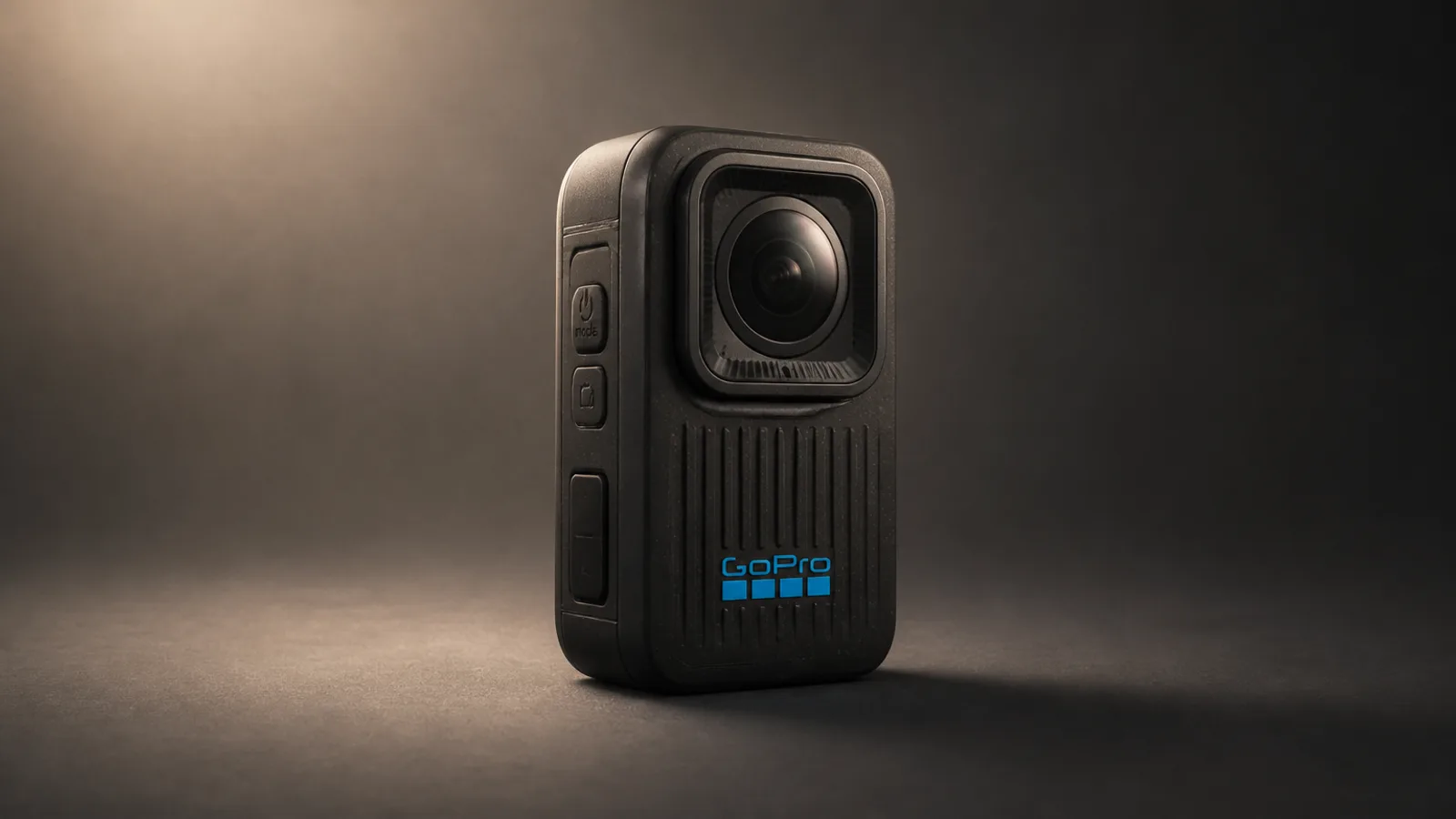
GoPro has taken its action‑camera design DNA and squeezed a cine‑centric feature set into an unusually small package. The new MISSION 1 Pro ILS arrives as a compact micro‑cinema camera built around a 50MP 1" image sensor and a GP3 processor, and it supports Open Gate capture modes that include 8K30 and 4K120. In other words, the company has created a shooter that sits between traditional action cams and larger cinema bodies: small and rugged like an action rig, but with resolution, frame‑rate and exposure tools aimed at filmmakers.
The sensor and processing are the technical headline. A 50MP 1" chip gives the camera raw detail headroom that most action cameras don’t offer, and the GP3 engine is presented as the compute platform that unlocks high‑data capture and extended modes. That combination lets the MISSION 1 Pro ILS record Open Gate at 8K30 and 4K120 (4:3), and GoPro also lists additional high‑speed windows including 8K60, 4K240 and 1080p960 for specialized slow‑motion workflows.
Dynamic range and low‑light handling are another focus. The company quotes "14 stops of dynamic range" as part of the camera’s specification, and also describes dedicated low‑light capture features intended to preserve detail where contrast is extreme. These characteristics change how motion and highlights behave in mixed light, making the little camera useful for applications where highlight roll‑off and shadow detail matter—run‑and‑gun doc work, POV inserts in narrative projects, or compact B‑camera duties where you still need cinematic latitude.
Optically the MISSION 1 Pro ILS departs from most action cams by using a Micro Four Thirds lens mount. That shift opens the door to a large ecosystem of native glass and adapter options, and helps explain how a compact shell can still deliver a cine look. GoPro also quotes a very wide 159° field of view for at least some capture modes, while offering enhanced zooming modes to help keep fast action in frame. Those zoom and FOV tradeoffs indicate the camera can be used both for ultra‑wide POVs and tighter creative framing when needed.
On the audio and image pipeline side, the camera provides 32‑Bit float audio recording to better manage in‑camera level handling during run‑and‑gun shoots, and supports 10‑Bit recording and a GP‑Log2 picture profile for grading workflows. Raw image capture and burst modes up to 60 fps are also part of the feature set, giving stills shooters and hybrid users more options than a typical action device.
Thermal and efficiency improvements are highlighted too: GoPro claims larger OLED display, improved runtimes and improved thermal performance compared with prior devices in its lineup. Those changes matter when you push the camera into long takes or sustained high‑frame‑rate capture where heat management and on‑board battery life can otherwise limit performance.
Footage and first‑look material are already appearing online. Early demos and sample reels are being posted to platforms like YouTube, and the initial clips give a sense of how the camera’s small form factor can be leveraged to produce cinematic shots that would be difficult or awkward with larger cinema rigs. The demos include voice and perspective from creators such as Abe Kislevitz, whose footage suggests the MISSION 1 Pro ILS sits in that creative niche between an action cam and a cinema camera.
That positioning is intentional. The camera’s rugged, compact body and decades of GoPro design thinking aim to make it attractive for situations where space, weight and durability are critical, but where image quality cannot be sacrificed. Users who want a lightweight, weather‑resistant package that also offers high resolution, Open Gate capture and professional‑grade recording options may find the MISSION 1 Pro ILS compelling.
At the same time, the camera’s capabilities ask filmmakers to rethink how they plan shoots. Open Gate 4:3 capture at 8K30 or 4K120 allows for flexible reframing and for creative extraction of different aspect ratios in post, but those modes produce large files and demand a post pipeline prepared to handle high data rates. The availability of 8K60 and 4K240 windows alongside 1080p960 means the unit can be pushed into very specialized slow‑motion and high‑frame‑rate capture, but those features also have implications for storage, offload speed and workflow logistics.
GoPro has priced and positioned the MISSION 1 Pro ILS as an accessible option for shooters who want cine traits without a full cinema rig. The company’s own phrasing was blunt: "It also really costs $700," which underlines how the firm sees the product in the market—highly capable, but still in a price bracket that changes the calculus for many buyers and renters.
Availability has been framed as immediate: the camera is out and either for sale or for rental. That means rental houses and small productions could rapidly add the unit to their toolkits, pairing it with gimbals, compact stabilizers, or mounting plates for stunt and POV setups. The MFT mount also simplifies choices for lensing, from ultra‑wide primes to tele adapters, enabling looks ranging from immersive first‑person to tightly controlled cinematic compositions.
Critically, the MISSION 1 Pro ILS is not simply a spec sheet; the early footage suggests it can make distinctive images. The camera’s combination of a 50MP readout, wide dynamic range and robust high‑speed options is yielding creative possibilities—things like speed‑ramped action, tight reframing from Open Gate sources, and narrative inserts shot from novel vantage points. Users should, however, plan for the downstream cost in storage and processing power when adopting those capture modes.
For buyers and renters considering the MISSION 1 Pro ILS, the trade‑offs are clear: a very compact, durable body that inherits GoPro’s wear‑and‑tear pedigree, married to sensor and codec features more commonly found in larger cine cameras. If your production needs include compact placement, weather resistance and high‑resolution, high‑frame‑rate capture, this device appears designed to meet those requirements. If your priority is sensor size vs. depth of field control, or if you require native large‑format looks, then a larger‑bodied cinema camera will still be preferable.
GoPro’s new camera represents a deliberate experiment in format and market fit: it tries to make cine features available in an action‑camera footprint, and early demonstrations indicate that it can produce high‑end video with unusual perspectives. As with any new tool, practical testing against a project’s real demands—lensing choices, post pipeline, and mounting needs—will determine whether the MISSION 1 Pro ILS becomes a go‑to option or a specialized complement in a broader kit.
Specs
| Sensor | 50MP 1" |
|---|---|
| Open Gate capture | 8K30 & 4K120 (4:3) |
| Other recording modes | 8K60, 4K240, 1080p960 |
| Dynamic range | 14 stops |
| Field of view | 159° |
| Audio | 32-Bit |
| Burst | 60 fps |
Where to buy
GoPro MISSION 1 Pro ILSFAQ
- What sensor does the GoPro MISSION 1 Pro ILS use?
- The camera uses a 50MP 1" image sensor.
- What video capture modes does it support?
- It supports 8K30 and 4K120 Open Gate (4:3) capture, plus additional modes such as 8K60, 4K240 and 1080p960.
- How much does the MISSION 1 Pro ILS cost?
- GoPro says, "It also really costs $700,".
Using or buying gear in the GCC? Read our GCC guide