
Links to B&H and other dealers in a story may earn T-Stop a commission at no cost to the reader.
Vivo's X500 Pro squeezes flagship video into a compact body with Sony‑linked sensor and 4K/240fps slow motion
Vivo's new X500 Pro brings the X500 Pro Max's video toolkit into a smaller 6.36in phone, introduces a Sony‑defined sensor, and offers 4K 120fps 10‑bit Log and native 4K 240fps slow motion.
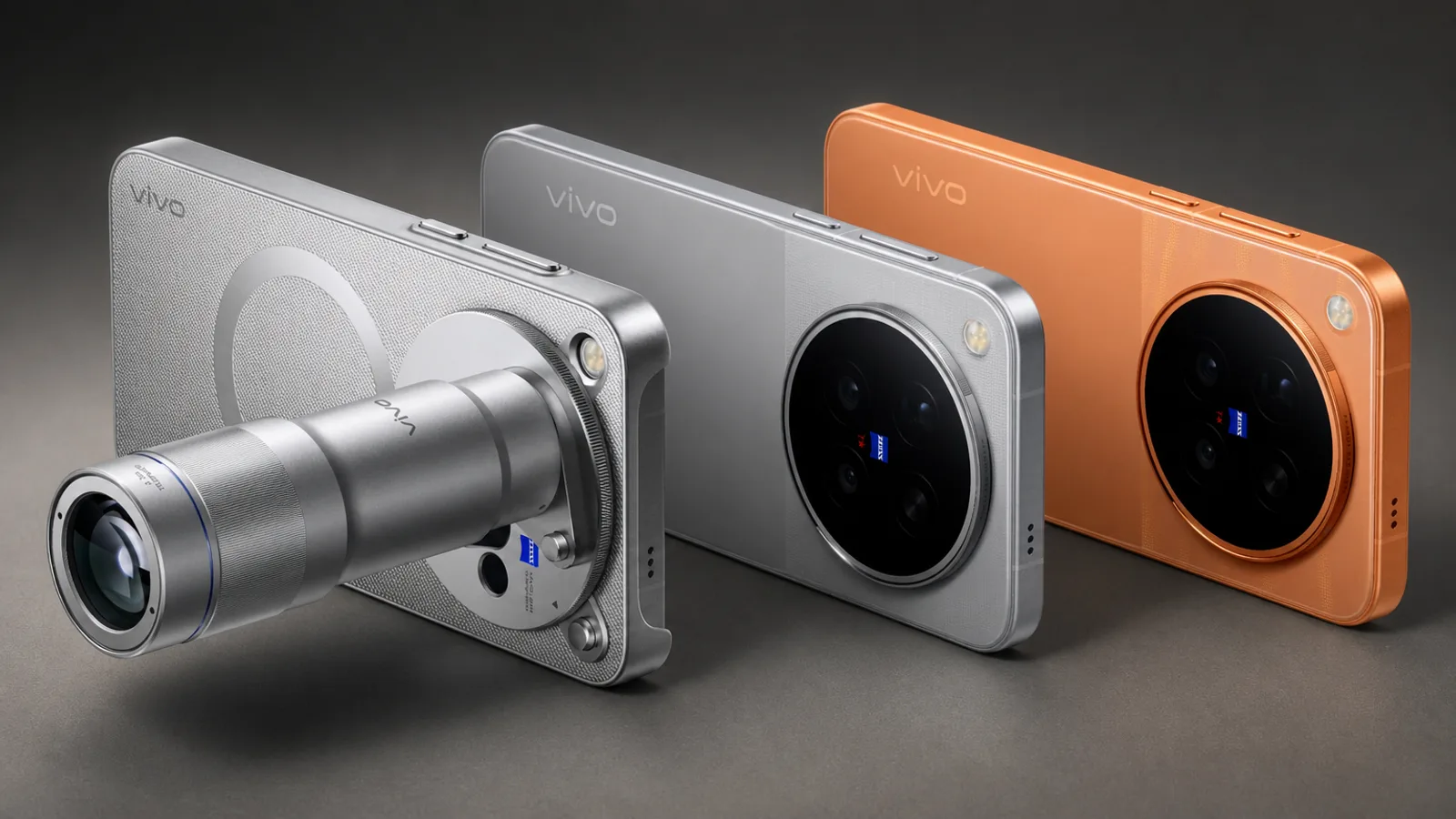
Vivo has introduced the X500 Pro in China, positioning it as a compact flagship that carries the same high‑frame‑rate video features as the larger X500 Pro Max while introducing a sensor the company says it defined jointly with Sony.
The handset centres its camera strategy around a three‑camera rear array and a focus on moving‑image flexibility. Recorded footage can reach 8K, and Vivo lists 4K capture at up to 120fps when using 10‑bit Log, plus a native 4K 240fps mode reserved for slow‑motion work. Vivo also highlights a revised Log capture and claims "17EV of dynamic range" for that mode.
Sensor and optics are a mix of formats. Vivo specifies a 50MP main camera on a 1/1.28in sensor behind a 24mm‑equivalent f/1.57 lens, a 64MP telephoto module at an 85mm equivalent and f/2.52 built on a 1/2in Sony LYT610, and a 50MP ultra‑wide with autofocus on a 1/2.75in chip and f/2.0 aperture. Separately, Vivo says it is "the world’s first to use the new sensor" it developed with Sony; Sony describes a related chip, the LYTIA 610, as a 1/2‑type, 64MP device with 0.7µm pixels and an RB2×2 OCL arrangement that places green photosites under individual microlenses while the red and blue pixels share 2×2 lenses to enable phase‑detection autofocus.
Sony says the LYTIA 610 delivers "more than 20%" higher spatial resolution than its LYTIA 601 predecessor and doubles readout speed, making it Sony’s first 1/2‑type design capable of 4K 120fps readout. Vivo’s marketing, however, also points out a capability the company associates with the main camera: Sony’s own specification lists HDR readout only up to 4K 60fps, so Vivo attributes its 4K 120fps DCG HDR mode to the primary sensor rather than the telephoto.
Vivo has kept some implementation details terse. The company says the 4K 240fps option is "native," but places it outside the phone’s regular video menu in a Film Workshop section labelled Super Slow; Vivo adds that this is a "Super Slow setting that outputs speed‑ramped clips." Subject tracking autofocus for people and objects works at rates up to 4K 120fps, and a Pro video mode is included among the rear camera options. The spec sheet lists "MP4 is the only recording format" and does not publish codec, chroma subsampling or bitrate figures, nor does it state how long sustained high‑frame‑rate capture can be maintained or on which of the three modules 4K 120fps Log is available.
Stabilisation and lens treatment get attention: both camera modules carry a CIPA 7.0 rating for pitch and yaw stabilisation, and each lens surface uses ZEISS T* coating. The telephoto offers 3.5x optical reach with a minimum focus distance of 18cm / 7.1in, and Vivo promotes telephoto stills up to 20x — with a ZEISS Extender G2 available as an optional accessory to reach a 200mm equivalent when used in combination with in‑camera digital cropping, a footnote notes.
Image‑making conveniences aimed at creators include a magnetically attaching 3.92in touch display that mirrors the rear lens view. The accessory is 5.65mm / 0.22in thick, works as a remote control out to Vivo’s measurement of 10m / 33ft and lets on‑camera pieces be framed on the back‑facing cameras rather than the front one.
Display and platform details underline the phone’s flagship positioning. The main flat panel measures 6.36in, is AMOLED, offers 10‑bit color depth with full P3 coverage and resolves to 2660 x 1216 (459ppi). Vivo quotes a peak highlight level of 4,500 nits at 20% APL and 2,000 nits full‑screen, the latter the figure the company suggests is most useful for judging outdoor exposure. The phone’s refresh range runs from 1 to 144Hz.
Under the hood sits a 2nm MediaTek Dimensity 9600 Pro with a performance configuration of two cores at 4.55GHz, three at 4.35GHz and three at 3.1GHz. Battery capacity is 6,510mAh (24.48Wh) with up to 90W wired charging and up to 40W wireless. The hardware package is finished with IP68 and IP69 ingress protection and a USB‑C port that supports USB 3.2 speeds and DisplayPort output; third‑party wireless microphones are listed as supported.
Vivo has also built creative conveniences into the capture pipeline. The revised Log mode is new for this generation and can output an in‑camera LUT so a graded look can be baked into captured footage or left for post. Custom 3D LUTs can be imported, applied to video during capture and shared. The phone’s Film Workshop area groups experimental capture modes such as Super Slow, which outputs speed‑ramped clips, and the company exposes subject tracking at high frame rates for both people and objects.
Pricing and configurations are listed for the Chinese market only in Vivo’s announcement. The X500 Pro comes in multiple memory and storage tiers: 12GB/256GB at 6,499 yuan (about $970), 12GB/512GB at 7,499 yuan (about $1,120), 16GB/512GB at 7,999 yuan (about $1,195), 12GB/1TB at 8,499 yuan (about $1,270) and 16GB/1TB at 8,999 yuan (about $1,345). Vivo’s regional store for Austria, Germany and Switzerland advertises an X500 series event for October 27, 2026 at 16:00 CET with pre‑orders opening then and sales starting on November 5.
Taken together, the X500 Pro packs a video feature set that mirrors Vivo’s larger X500 Pro Max into a smaller footprint, while introducing Sony‑defined silicon and workflow tools such as in‑camera LUT baking and importable 3D LUTs. The phone leaves several operational details unspecified in its public materials — recording codec, chroma and bitrate for MP4, which camera supports particular high‑frame‑rate Log modes and sustained capture durations — which are likely to matter to professional users evaluating it as a production tool.
Specs
| Main display | 6.36in |
|---|---|
| Display resolution | 2660 x 1216 (459ppi) |
| Display color | 10-bit |
| Peak brightness | 4,500 nits |
| Full-screen brightness | 2,000 nits |
| Refresh rate | 1 to 144Hz |
| Main sensor | 50MP 1/1.28in |
| Telephoto sensor | 64MP 1/2in |
| Ultra-wide sensor | 50MP 1/2.75in |
| Telephoto reach | 3.5x optical zoom |
| Telephoto min focus | 18cm / 7.1in |
| Telephoto advertised crop | 20x |
| Optional teleconverter | 200mm equivalent |
| Front mirror display | 3.92in |
| Mirror thickness | 5.65mm / 0.22in |
| Mirror remote range | 10m / 33ft |
| SoC | 2nm MediaTek Dimensity 9600 Pro |
| SoC cores | two cores at 4.55GHz, three at 4.35GHz and three at 3.1GHz |
| Battery | 6,510mAh (24.48Wh) |
| Wired charging | 90W wired |
| Wireless charging | 40W wireless |
| Ingress protection | IP68; IP69 |
| Video modes | 8K; 4K 120fps; 4K 240fps |
| Stabilization rating | CIPA 7.0 |
FAQ
- Which new Sony sensor does the X500 Pro use?
- Vivo says it is "the world’s first to use the new sensor." Sony describes the LYTIA 610 as a 1/2‑type, 64MP chip with 0.7µm pixels and an RB2×2 OCL structure.
- What are the phone’s high‑frame‑rate video capabilities?
- Video can reach 8K, with 4K capture at up to 120fps in 10‑bit Log and a native 4K 240fps slow‑motion option. Subject tracking autofocus works at up to 4K 120fps.
- What recording formats and codecs are specified?
- According to the specification sheet, "MP4 is the only recording format." The sheet does not list a codec, chroma subsampling or bitrate.
Using or buying gear in the GCC? Read our GCC guide