
Links to B&H and other dealers in a story may earn T-Stop a commission at no cost to the reader. As an Amazon Associate, T-Stop earns from qualifying purchases.
Canon launches EOS R8 Mark II as a compact full‑frame hybrid with big video chops
Canon’s new EOS R8 Mark II packs a 24.2MP full‑frame sensor, 7.5 stops of IBIS, faster burst and pre‑capture tools, intelligent AF and 6K‑oversampled 4K60p 10‑bit video in a redesigned compact body.
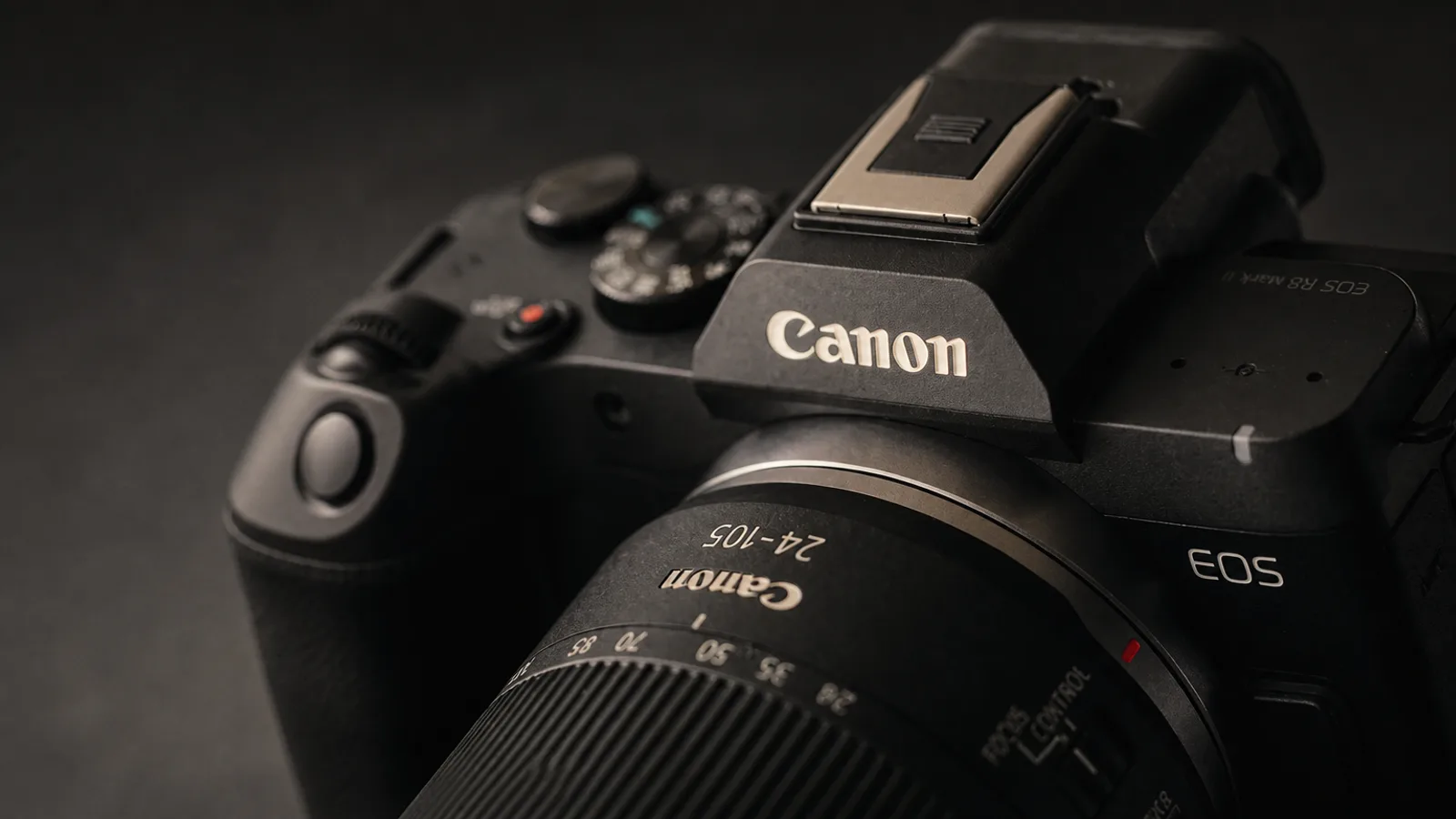
Canon has unveiled the EOS R8 Mark II, a redesigned compact full‑frame mirrorless hybrid that aims to bring advanced stills and video features into a travel‑minded package. The company describes the camera as "A lightweight and portable full-frame hybrid powerhouse" and positions it for creators who want a step up in capability without a heavy kit.
Inside the body sits a 24.2 MP CMOS sensor that Canon says will serve both photographers and videographers. For stills, the R8 Mark II focuses on burst performance and capture responsiveness: the camera adds faster continuous shooting and introduces a pre‑capture mode intended to improve the keeper rate when decisive moments happen before the shutter is fully depressed. The electronic shutter can reach 40 fps for rapid sequences, while a refined autofocus implementation delivers subject tracking via Dual Pixel CMOS AF II with Tracking.
Stabilization has been beefed up for handheld work. Canon fits a 5‑Axis In‑Body Image Stabilization system that the company quantifies as 7.5 stops of IBIS, a figure that will appeal to hybrid shooters who move between run‑and‑gun video and stills handheld in low light.
Video capabilities are a key focus. Canon highlights internal 4K60p 10‑bit capture sourced from an oversampled 6K readout, which the company lists as "6K oversampled 4K 60p 10-bit recording." That oversampling route is intended to raise detail and reduce aliasing compared with a straight 4K crop. For different grading pipelines, the R8 Mark II offers Canon Log 3 and an expanded dynamic capability: Canon states the camera can access "14 stops of dynamic range" when Canon Log 3 is enabled via a Custom Picture option.
For workflows that favour simpler delivery, the camera also includes HDR recording options and Canon’s standard picture profile choices. Canon calls out HDR compatibility with Canon 709 and BT.709 Standard, allowing users to choose less demanding, quicker paths from capture to deliverable files.
If slow motion is required, the R8 Mark II can shoot high‑framerate Full HD video. Canon specifies the camera’s slow‑motion ceiling as "Full HD at up to 180p", which gives editors room for dramatic retiming without moving into heavier, higher‑resolution files.
Audio and connectivity are practical for run‑and‑gun use: the body provides both a microphone input and a headphone output, and the camera supports modern on‑set workflows through Wi‑Fi and Bluetooth. A multi‑function shoe maintains compatibility with Canon accessories and external capture tools, while a vari‑angle rear screen aids framing from awkward angles.
Ergonomics include a 3.0" 1.62m‑Dot Vari‑Angle Touchscreen on the back and a 2.36m‑Dot OLED electronic viewfinder for eye‑level composition. The combination aims to keep the camera compact without sacrificing the user interfaces shooters expect from current mirrorless models.
Canon’s launch materials position the R8 Mark II clearly for mobile creators: "Canon is positioning its new EOS R8 Mark II as an ideal level-up option for these types of creators." The company stresses that the camera is intended for content makers who travel light but demand upgraded imaging and capture versatility compared with entry models.
The R8 Mark II’s feature set makes it a contender for solo creators, vloggers and hybrid shooters who want a single tool that can handle interview clips, social content and fast‑paced stills. Key technical highlights that Canon lists include 4K60p 10‑Bit internal capture, a pre‑capture function tied to the 40 fps electronic shutter, and five‑axis stabilization for smoother handheld footage.
On the autofocus front, Dual Pixel CMOS AF II with subject tracking underpins fast, reliable acquisition for both moving subjects and video sequences. That AF system, paired with the sensor and processing, is intended to reduce the need for constant manual focus intervention during run‑and‑gun shoots.
Canon also stresses portability. In its own words, the company calls the camera "A lightweight and portable full-frame hybrid powerhouse," a phrase it uses to summarise the balance it aimed for between capability and compactness.
For editors and DITs, the camera’s 10‑bit internal recording and Canon Log 3 option provide colorists with more grading latitude from a small package, while HDR and BT.709 deliverables simplify faster turnarounds. The presence of both microphone input and headphone output makes on‑camera sound monitoring straightforward for solo operators.
Taken together, the EOS R8 Mark II’s mixture of a 24.2 MP full‑frame sensor, improved burst and pre‑capture tools, robust stabilization and an emphasis on higher‑quality internal video capture signals Canon’s intent to offer a genuinely hybrid tool for creators who want to move up from entry‑level gear without moving into larger cinema cameras.
The company’s publicity underscores the camera’s dual‑role design: it aims to serve photographers who need reliable high‑speed capture and videographers who require 10‑bit codecs, oversampled 4K and flexible picture profiles. Whether the balance struck by Canon fits a given creator will depend on their particular mix of stills, run‑and‑gun video and post‑production needs, but the R8 Mark II clearly leans into hybrid versatility.
Specs
| Sensor | 24.2MP |
|---|---|
| IBIS | 7.5 stops of IBIS |
| Video (oversampled) | 6K oversampled 4K 60p 10-bit recording |
| Slow motion | Full HD at up to 180p |
| Dynamic range (Log) | 14 stops of dynamic range |
| Shutter burst | 40 fps |
| Stabilization axes | 5-Axis |
| EVF | 2.36m-Dot |
| Rear screen | 3.0" 1.62m-Dot |
Where to buy
Canon EOS R8 Mark IIFAQ
- What sensor does the EOS R8 Mark II use?
- The camera uses a 24.2 MP CMOS sensor.
- What are the R8 Mark II’s headline video capabilities?
- Canon lists "6K oversampled 4K 60p 10-bit recording." It also offers Canon Log 3 with "14 stops of dynamic range" in Custom Picture mode and can record "Full HD at up to 180p" for slow motion.
- How much in‑body stabilization does it have?
- The camera features 5‑Axis In‑Body Image Stabilization and is specified as providing "7.5 stops of IBIS."
Using or buying gear in the GCC? Read our GCC guide