
Links to B&H and other dealers in a story may earn T-Stop a commission at no cost to the reader. As an Amazon Associate, T-Stop earns from qualifying purchases.
ARRI issues ALEXA 35 SUP 6.2.0 with Cine RT serial support and live DoF ramping
ARRI's Software Update Package 6.2.0 adds direct Cine RT SERIAL support, shared focus marks with Hi-5, depth-of-field ramping for live use and workflow tweaks.
Key points
- ARRI released Software Update Package 6.2.0 for multiple ALEXA models with new focus and live features.
- Focus marks now sync between camera and Hi-5 and appear in the EVF and SDI overlays.
- Live depth‑of‑field ramping keeps image brightness steady but may confuse some post tools' EI handling.
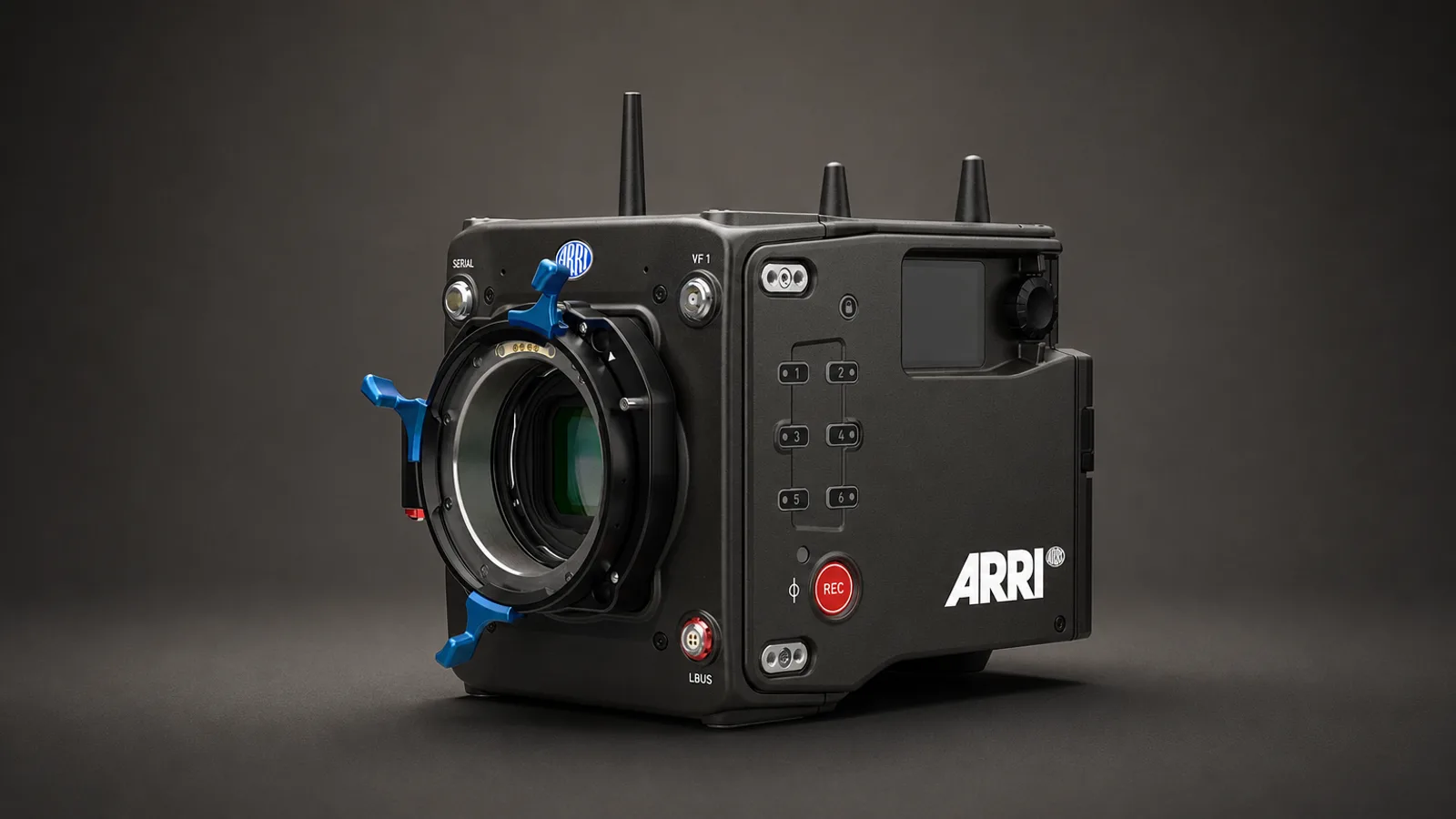
ARRI has released Software Update Package 6.2.0 for its ALEXA family, bringing a mix of focus, live-production and playback features aimed primarily at focus pullers and multicamera teams. The update brings direct support for Focusbug Cine RT over a SERIAL connection and tight integration with Hi-5 units, plus a live-capable depth-of-field ramp that keeps on-air brightness steady while the iris moves.
One headline feature is native Cine RT SERIAL compatibility. That lets the camera talk directly to a Focusbug Cine RT system without needing the usual adapter hardware, simplifying cabling and control in many rigs. ARRI included a short, plain statement in the notes: "all Cine RT functions covered by the Focusbug License for Hi-5 and Hi-5 SX are now available without either adapter." That change should reduce adapter clutter on sets that already use Hi-5 hand units.
Marks created on camera or on Hi-5 hand units are now shared between devices so operators and assistants can see the same information in parallel. ARRI describes the behaviour succinctly in the release copy: "shares focus marks between camera and Hi-5 hand unit." Those marks are shown in both the EVF and the SDI status overlays, and the overlays can also show a live distance readout when a compatible rangefinder such as the Cine RT is attached. ARRI does note a latency expectation for newly placed marks: "a new mark may appear with a delay of about one second." That delay is small but worth knowing for tight live cues.
Beyond focus tools, SUP 6.2.0 adds a depth-of-field ramping mode intended for broadcast and other live situations. When enabled, the camera will alter its exposure settings automatically while the iris is moved so that perceived image brightness remains steady. In practice this allows an operator to pull focus into a nearer or farther plane and shift the apparent depth of field between foreground and background while the program output keeps a consistent level of brightness.
ARRI warns that this depth-of-field ramping works by changing EI dynamically inside a clip, and that some post-production software may not read the resulting EI metadata correctly. That means an edit or grade might not reproduce the live exposure intent if a tool ignores or misinterprets the dynamic EI values. The release notes also call out a recorded‑file artifact: mirrored ProRes recordings can show flicker or stepping when depth-of-field ramping is used, so productions that rely on a clean ProRes mirror should test the workflow before committing to the feature in critical shoots.
The update also includes a number of practical workflow and monitoring improvements. Multicam SDR and HDR looks carried on control panels now get an explicit prefix — either “SDR” or “HDR” — so short displays make it easier to distinguish between them. A new SDI Play Mode option lets users choose how high‑frame‑rate clips are reviewed: play them back at the project rate for slow-motion review, or at the recorded frame rate for true-speed playback. Those changes are small individually, but they reduce the mental overhead on multicam rigs and clip review stations.
ARRI frames SUP 6.2.0 as broadly useful for ALEXA 35 users, and recommends the update for all customers. The company also advises caution about timing: the install process requires a factory reset before the package can be applied, and the full update routine can take up to 20 minutes to finish. Because of that reset and the brief downtime, ARRI explicitly recommends not installing the update while a camera is in active production and suggests reading the release notes for a list of known issues before proceeding.
The release notes contain a handful of other smaller fixes and tweaks to playback and user interfaces; ARRI says the package is available to download now. For crews that regularly use Hi-5 or Focusbug systems, and for live broadcast teams that need controlled depth‑of‑field moves without brightness shifts, SUP 6.2.0 brings useful tools — provided teams test the new behaviours with their post pipeline and mirrored-record workflows first.
Taken together, the changes put more of the focus-toolchain and live-control flow inside the camera and its control surfaces, rather than relying on external adapters or complicated on-set workarounds. That should make setups cleaner and give focus technicians and multicam operators more consistent feedback during both rehearsal and on-air operation.
Specs
| Firmware version | 6.2.0 |
|---|---|
| Update time | up to 20 minutes |
Where to buy
ARRI ALEXA 35FAQ
- Which ARRI cameras get Software Update Package 6.2.0?
- SUP 6.2.0 is for the ALEXA 35, ALEXA 35 Xtreme, ALEXA 35 Live and ALEXA 265.
- Does the update add Focusbug Cine RT support without adapters?
- Yes. SUP 6.2.0 provides direct Focusbug Cine RT SERIAL support and ARRI says "all Cine RT functions covered by the Focusbug License for Hi-5 and Hi-5 SX are now available without either adapter."
- How long does installation take and are there special requirements?
- The update requires a factory reset before installation and the process can take up to 20 minutes.
Using or buying gear in the GCC? Read our GCC guide