
Links to B&H and other dealers in a story may earn T-Stop a commission at no cost to the reader.
Kodak’s Disc cameras: a technical bright spot that turned into a quiet failure
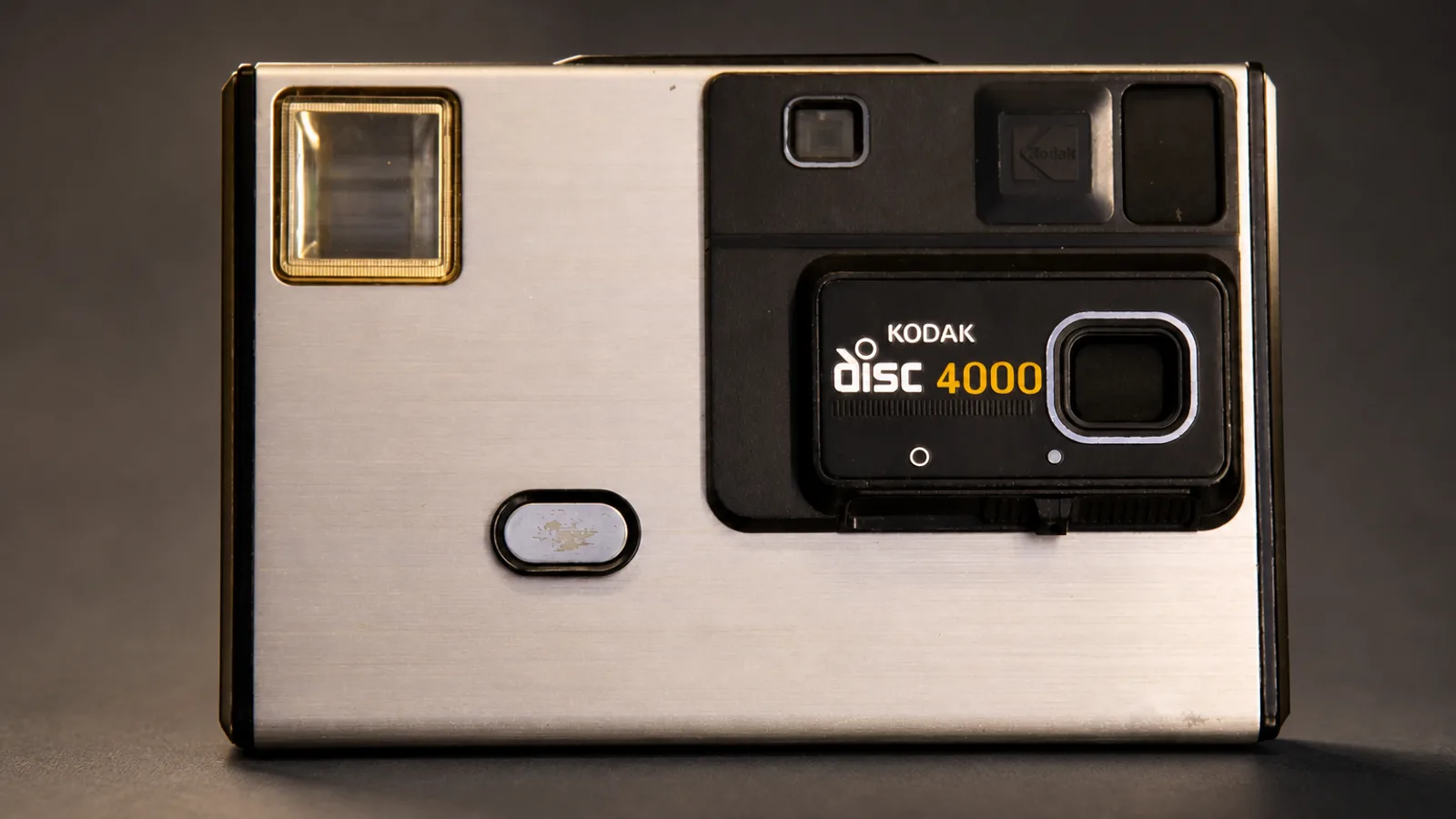
Kodak’s flat Disc cameras sold in the millions and introduced a first-of-its-kind molded glass aspheric element, yet the format still flopped.
Key points
- Kodak sold roughly 8 million Disc cameras in a single year, in 1982.
- Kodak's president told shareholders the Disc system would be "the new engine that will drive this industry forward."
- The Disc’s flat bodies contained an industry-first molded glass aspheric lens element produced at scale.
Kodak's Disc system is one of those mid‑century product stories that mixes technical daring with commercial disappointment. At its peak the format moved in huge numbers — Kodak sold roughly 8 million Disc cameras in a single year, in 1982 — yet the rollout did not deliver the lasting success the company expected.
The company’s leadership framed the new format in sweeping terms. In a message to shareholders, Kodak’s president said the Disc system would be "the new engine that will drive this industry forward." That line captured the optimism behind the compact, flat camera bodies and the consumer push Kodak was aiming for.
Beneath the small shells there was real engineering accomplishment. The Disc bodies housed an optical breakthrough: a molded glass aspheric lens element made in large quantities for the first time in the camera trade. That component represented a technological first for mass production, and for a time it showed how far industrial optics could be pushed into inexpensive consumer cameras.
Despite those advances, the format did not live up to expectations. The Disc system is remembered today as a commercial misstep for Kodak. Observers and company documents note that a tiny negative size people often single out as the culprit accounted for only part of the failure; other factors contributed to the system’s inability to sustain itself.
The Disc story is useful to revisit because it does not fit the simple success-or-failure narrative. It demonstrates how a platform can be both an innovation vehicle and a strategic dead end: Kodak invested in new form factors and novel optics, and yet the market reaction and longer‑term outcomes did not reward that investment.
For photographers and equipment historians, the Disc era remains interesting for its contradictions. It produced one of the earliest examples of large‑scale molded‑glass aspheric optics in consumer cameras, while also becoming a reminder that technical firsts do not always translate into market permanence. The format’s brief commercial prominence and its quiet fading make it a compact case study in product history and the risks of betting a company’s future on a single new system.
Specs
| Peak sales year | 1982 |
|---|---|
| Units sold in peak year | 8 million |
FAQ
- How many Disc cameras did Kodak sell at its peak?
- Kodak sold roughly 8 million disc cameras in a single year, in 1982.
- What did Kodak's president say about the Disc system?
- Kodak's president told shareholders the disc system would be "the new engine that will drive this industry forward."
- What optical innovation did the Disc cameras include?
- The Disc bodies contained a molded glass aspheric lens element produced at scale, an industry first.
Using or buying gear in the GCC? Read our GCC guide