
Links to B&H and other dealers in a story may earn T-Stop a commission at no cost to the reader.
Flashback One75: a brass‑trim half‑frame digicam with DNG capture for $179
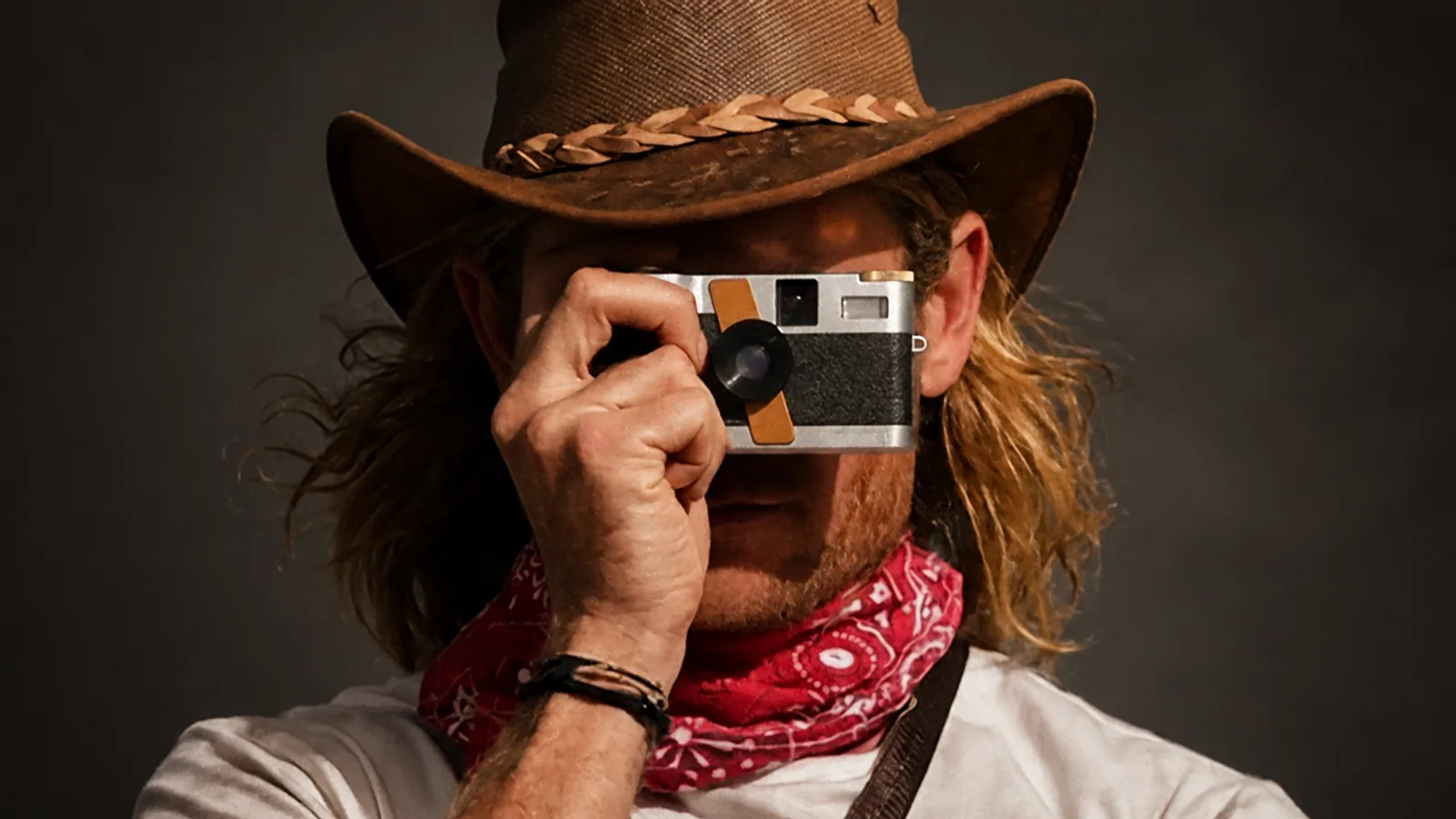
Flashback’s One75 upgrades its half‑frame approach with metal plates, brass controls, 13MP vertical images, Raw DNG support and a mechanical winder.
Key points
- Flashback unveiled the One75, a half‑frame digicam with brass controls and aluminum plates.
- The camera takes 13MP vertical images, supports Raw (DNG) files and holds up to 27 shots per “roll.”
- One75 has an OLED settings display but no photo playback screen; transfers happen via Bluetooth, Wi‑Fi or USB‑C.
Flashback has followed up its disposable‑inspired One35 with a more upscale take on the half‑frame digicam idea: the One75. The new model keeps the playful rituals that mimic a small roll of film, but it trades much of the original’s plastic shell for metal and brass details to feel a little more like a traditional camera in the hand.
Physically the One75 departs from its predecessor in obvious ways. Flashback fitted aluminum top and bottom plates and added brass controls, giving the body a heavier, more premium touch than the usual all‑plastic toy cameras. The camera still favours a vertical shooting posture — a nod to classic half‑frame formats — and includes a portrait‑oriented optical viewfinder for composing those tall frames.
Under the hood the camera is set up to capture 13MP images. Flashback has not disclosed the sensor’s physical size or further resolution details, and it also didn’t list a quoted focal length for the fixed lens. Sample images released by the company suggest a fairly wide field of view, but the manufacturer stopped short of publishing exact optics specs.
One of the bigger functional differences between the One75 and some other novelty vertical cameras is file access. The One75 can capture Raw photos “in DNG format,” but Flashback says you must plug the camera into a computer to retrieve those files. The company’s app will read the camera’s JPEGs for instant viewing, but DNG files require a wired download to a desktop or laptop.
The One75 is built around a deliberate workflow that copies film behaviour. It records up to 27 photos before the internal counter reaches the end of a small “roll,” and there’s an OLED on the top of the camera that shows a frame counter and lets you tweak settings. Advancing the sequence is done with a mechanical winder — an analog gesture that completes the simulation of loading and turning a strip of film.
When you transfer images from the camera to the app or to a computer over Bluetooth, Wi‑Fi or USB‑C, the unit performs a reset that the company likens to inserting a fresh roll. For photographers who want that delayed gratification, there’s a Film Camera Mode that requires users to “wait 24 hours to view the photos.” If you prefer to see results immediately, the One75 also supports a Digicam Mode that pushes images straight to the Flashback app for instant review.
Image‑making options include a double‑exposure mode and eight built‑in film types that can be swapped on the camera itself to change the look of JPEGs. Flashback has also added a xenon flash for stronger burst illumination than an LED strobe, and the lens barrel includes a 25mm threaded mount for filters and screw‑on add‑ons — a useful touch if you want to experiment with additional glass or filters.
Despite the return to metal parts and mechanical controls, the One75 isn’t a screenless device. There’s no rear display for viewing shots, but a small OLED on top is present for changing settings and checking the film‑roll counter. Composition is done through the optical viewfinder or by previewing in the Flashback app once the camera has been paired.
Practical additions the company has included are a tripod mount and a self‑timer, which expand how the camera can be used beyond quick handheld snapshots. The One75 comes in two finishes: Brushed Aluminum (a silver/black scheme) and Noir (an all‑black look).
Flashback’s framing and tactile design clearly lean into nostalgia while trying to appeal to people who want a sturdier, more camera‑like object. The mechanical winder, the frame counter and the reset on transfer together create a small ritual around shooting that’s intended to mimic the cadence of a classic half‑frame film camera. For users who enjoy that slow‑reveal way of working, the choice between waiting 24 hours or seeing images immediately in Digicam Mode gives some flexibility.
On the technical side there are loose ends. The company lists the image size as 13MP but does not supply a sensor grade, and the lens focal length wasn’t called out in the spec sheet. That leaves unanswered questions about crop, field of view and depth‑of‑field behaviour that photographers often want to know before committing.
Flashback positions the One75 against other modern vertical‑frame offerings by stressing the added metalwork and the ability to capture Raw DNG files. Unlike a vertical competitor noted by Flashback, the One75’s Raw images are not accessible through the mobile app; you must connect the camera directly to a computer to retrieve DNGs, while JPEGs remain available to the Flashback app for quick previews and sharing.
The company has started pre‑orders and set a surprising price for the One75: $179. Flashback drew attention to that figure with an aside that it is not a typo. The firm also told customers that pre‑orders will arrive before Christmas.
If you like tactile controls, manual winding, and a camera that forces slower shooting decisions, the One75 looks like a deliberately limited, design‑forward take on digital half‑frame imaging. If you care more about complete technical transparency — sensor size, lens focal length and the full delivery mechanism for Raw files via software — Flashback’s announcement leaves some of those specifics to be confirmed in follow‑up materials.
Either way, the One75 is an attempt to move the half‑frame digicam idea upmarket: a small camera that trades plastic for metal, keeps the ritual of a tiny roll of images and adds the option to capture Raw files for those who want to edit beyond the in‑camera film looks.
Specifications and certain technical details were not fully disclosed in the announcement; prospective buyers who need exact sensor or lens numbers should wait for more complete specs from Flashback.
The One75 will be offered in Brushed Aluminum and Noir finishes, and pre‑orders are open at the announced $179 price.
Specs
| Price | $179 |
|---|---|
| Photo resolution | 13MP |
| Roll capacity | 27 |
| Film Camera Mode delay | 24 hours |
| Lens thread | 25mm |
FAQ
- Does the One75 shoot RAW?
- Yes — Flashback says the One75 “can capture Raw photos (in DNG format),” but those files must be accessed by plugging the camera into a computer rather than through the app.
- How many images does the camera hold per roll?
- The camera supports up to 27 photos at a time, with a frame counter on the OLED and a mechanical winder for advancing the “roll.”
- Does the One75 have a screen for playback?
- No — the One75 has an OLED display on the top for settings, but it lacks a display for viewing photos; you must use the companion app or transfer files to a computer.
Using or buying gear in the GCC? Read our GCC guide