
Links to B&H and other dealers in a story may earn T-Stop a commission at no cost to the reader. As an Amazon Associate, T-Stop earns from qualifying purchases.
Sony expands LYTIA line with a mobile 1/1.56‑type sensor that prioritises low light and 4K60 HDR
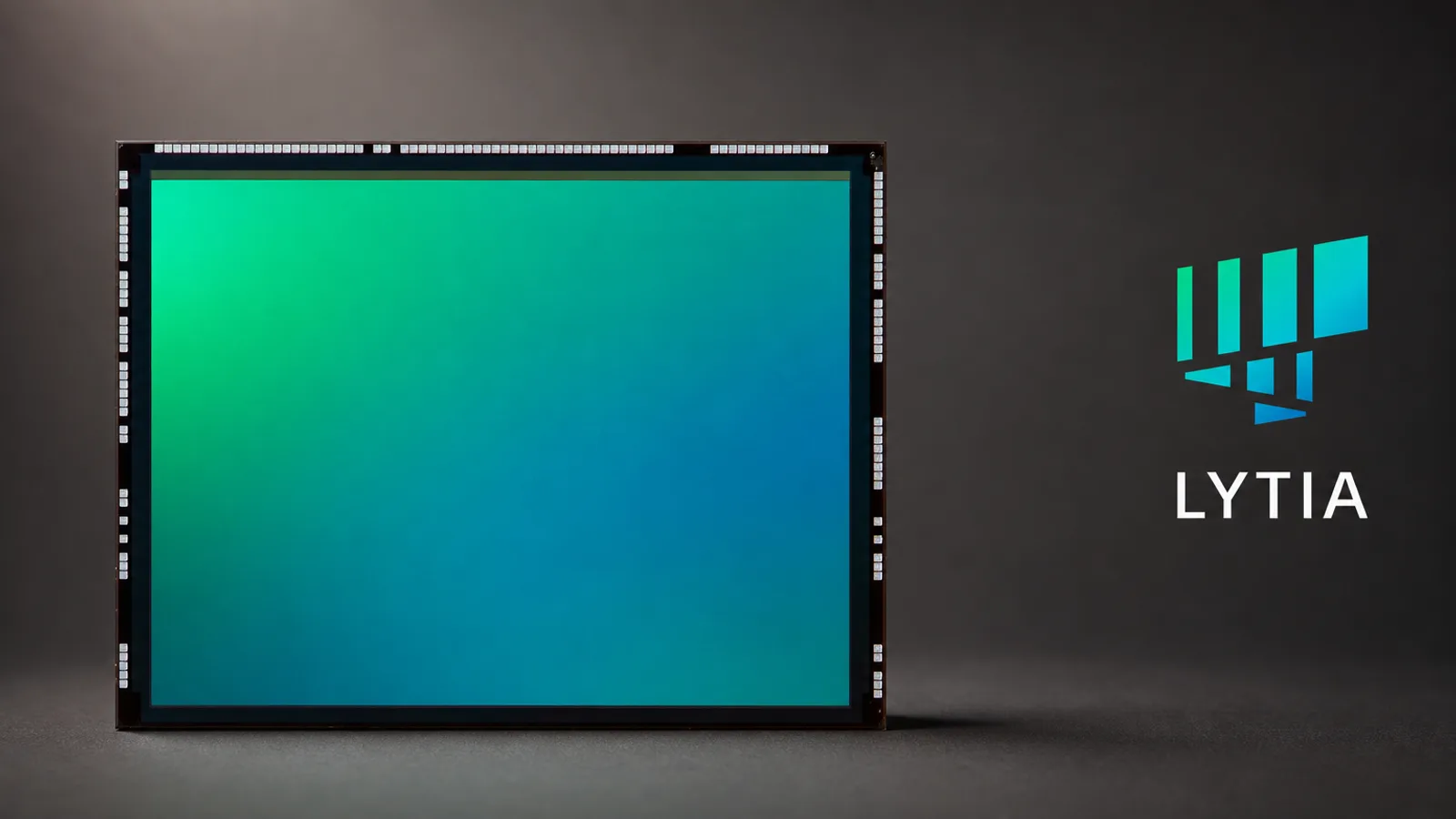
Sony has unveiled a LYTIA mobile 1/1.56‑type sensor that pairs a big‑phone sensor size with Ultra High Conversion Gain and HDR tricks to cut noise and widen dynamic range.
Key points
- Sony introduced a LYTIA mobile 1/1.56‑type sensor aimed at main smartphone cameras.
- The sensor supports 4K 60 fps HDR video with all‑pixel autofocus while reducing AD conversion time and power draw.
- Sony says UHCG and HF‑HDR deliver a 100 dB dynamic range and about 50% less random noise.
Sony has added a mobile‑oriented member to its LYTIA family: a 1/1.56‑type image sensor designed to be used as the main camera in smartphones. The company positions the new part as a way to bring higher‑end LYTIA technologies into devices that use the 1/1.56‑type size, a format that is becoming common in the phone market.
At the heart of the sensor is Sony’s Ultra High Conversion Gain (UHCG) circuit approach. The company says UHCG raises the efficiency of charge‑to‑voltage conversion so that less visible grain appears in dark areas of an image. Sony quantifies the improvement against a conventional product in its own range, reporting about a 50% reduction in random noise when compared with the LYTIA 700, a 1/1.56‑type, approximately 50‑effective megapixel CMOS image sensor.
That noise reduction is presented alongside an effort to widen the camera’s usable light range. Sony has combined UHCG with a Hybrid Frame‑HDR system — which merges Dual Conversion Gain HDR capture with short‑exposure frames — to reach what it calls a 100 dB dynamic range. The company says this mix of circuitry and HDR processing expands the tonal window so images retain more detail in both shadows and highlights in high‑contrast scenes.
Video capabilities are a major part of the announcement. By optimising AD conversion circuitry, Sony says the sensor can record 4K 60 fps HDR video while running all‑pixel autofocus. The design reduces the time needed for AD conversion and trims sensor power consumption, which Sony highlights as necessary for sustained, high‑frame‑rate HDR capture on mobile hardware.
Sony points out that this is the first LYTIA product in a 1/1.56‑type size to use a 1.0 μm pixel while supporting the combination of 4K 60 fps HDR and all‑pixel AF. To help preserve clean motion in fast footage, the sensor also supports a single‑frame HDR method for 4K 60 fps video; Sony says this suppresses motion artefacts while keeping exposure time long enough for low‑noise capture in darker scenes.
Technical details in the announcement describe how DCG‑HDR imaging handles low‑ to medium‑brightness ranges with a single exposure, then merges that data with short‑exposure frames that capture high‑brightness areas. The resulting composite is intended to stretch the sensor’s dynamic range without relying solely on multi‑frame HDR stacking that can create ghosting in moving subjects.
Sony frames the new part as an effort to make high‑quality imaging more widely available on phones. The company previously signalled a belief that around 50MP sensors will become a baseline for smartphone cameras; this new LYTIA continues that trend by bringing circuit techniques from Sony’s higher‑end LYTIA series into a format that many phone makers prefer.
For manufacturers, the combination of better low‑light performance, a claimed 100 dB dynamic range and the ability to shoot 4K 60 fps HDR with all‑pixel AF may make it easier to deliver camera features that feel both responsive and capable in challenging light. Sony also emphasises the efficiency gains from its optimized AD conversion design, suggesting the sensor is intended to meet the thermal and power limits found in mobile devices while still maintaining high imaging performance.
Taken together, the package addresses three common priorities for phone cameras: cutting visible grain in dark scenes, capturing a wide tonal range in high‑contrast settings, and delivering high‑quality, high‑frame‑rate HDR video without sacrificing autofocus or battery life. Sony says bringing those technologies into a 1/1.56‑type sensor should help phone makers deliver “high‑quality still images and videos in dark environments, high‑contrast scenes, and a wide range of other shooting conditions.”
Sony also notes the lineage of the design: the new sensor inherits technologies developed for the company’s LYTIA high‑end series while being adapted to the constraints and expectations of mobile applications. That combination of borrowed high‑end techniques and targeted circuit optimisation is the angle Sony is using to position the product for mainstream smartphone use.
Specs
| Sensor size | 1/1.56-type |
|---|---|
| Pixel size | 1.0 μm |
| Video | 4K 60 fps HDR |
| Dynamic range | 100 dB |
| Noise reduction | approximately 50% (vs LYTIA 700) |
Where to buy
Sony LYTIAFAQ
- What sensor size and pixel pitch does the new LYTIA use?
- The sensor is a 1/1.56‑type with a 1.0 μm pixel size.
- Can it shoot high‑frame‑rate HDR video?
- Yes — Sony says the sensor supports 4K 60 fps HDR video recording with all‑pixel autofocus.
- How much dynamic range and noise improvement does Sony claim?
- Sony reports a 100 dB dynamic range and states random noise is reduced by approximately 50% compared with the LYTIA 700.
Using or buying gear in the GCC? Read our GCC guide