
Links to B&H and other dealers in a story may earn T-Stop a commission at no cost to the reader.
Final Cut Pro overhaul adds MotionVFX, Pixelmator Pro image workflows and AI features ahead of November 2026 release
Apple is rolling a major Final Cut Pro upgrade in November 2026 that ties MotionVFX into the app, deepens Pixelmator Pro and AI image tools, and adds timeline and content services.
Key points
- Apple will release a major Final Cut Pro update in November 2026 that integrates MotionVFX into the app.
- The update links Pixelmator Pro and AI image generation to the Final Cut Pro timeline for faster visual workflows.
- Apple Creator Studio is offered at $12.99 per month or $129 annually; Final Cut Pro remains available for $299.99 as a one‑time purchase.
Apple is preparing a substantial update to Final Cut Pro, due in November 2026, that moves the app further into a single, more connected creative environment. The refresh folds a MotionVFX library into the Mac editor, tightens image workflows with Pixelmator Pro and new AI tools, and layers a set of timeline improvements and content services meant to speed finishing work.
The MotionVFX inclusion puts a large collection of third‑party creative assets inside the Final Cut Pro interface. Editors will be able to browse and apply effects, transitions, titles and motion templates without leaving the app, and the package also brings a set of professional creative tools previously sold separately. The company says the move will reduce the need for some external purchases by making rotoscoping, tracking and advanced color grading tools available inside the Final Cut Pro environment.
Timeline controls receive focused attention in the update. Keyframing gets more nuanced easing controls, and clips can be detached from the primary storyline so they can be repositioned freely on the timeline. The editing engine will also support an expanded set of transcription languages, with 23 additional languages added for captioning and transcription workflows.
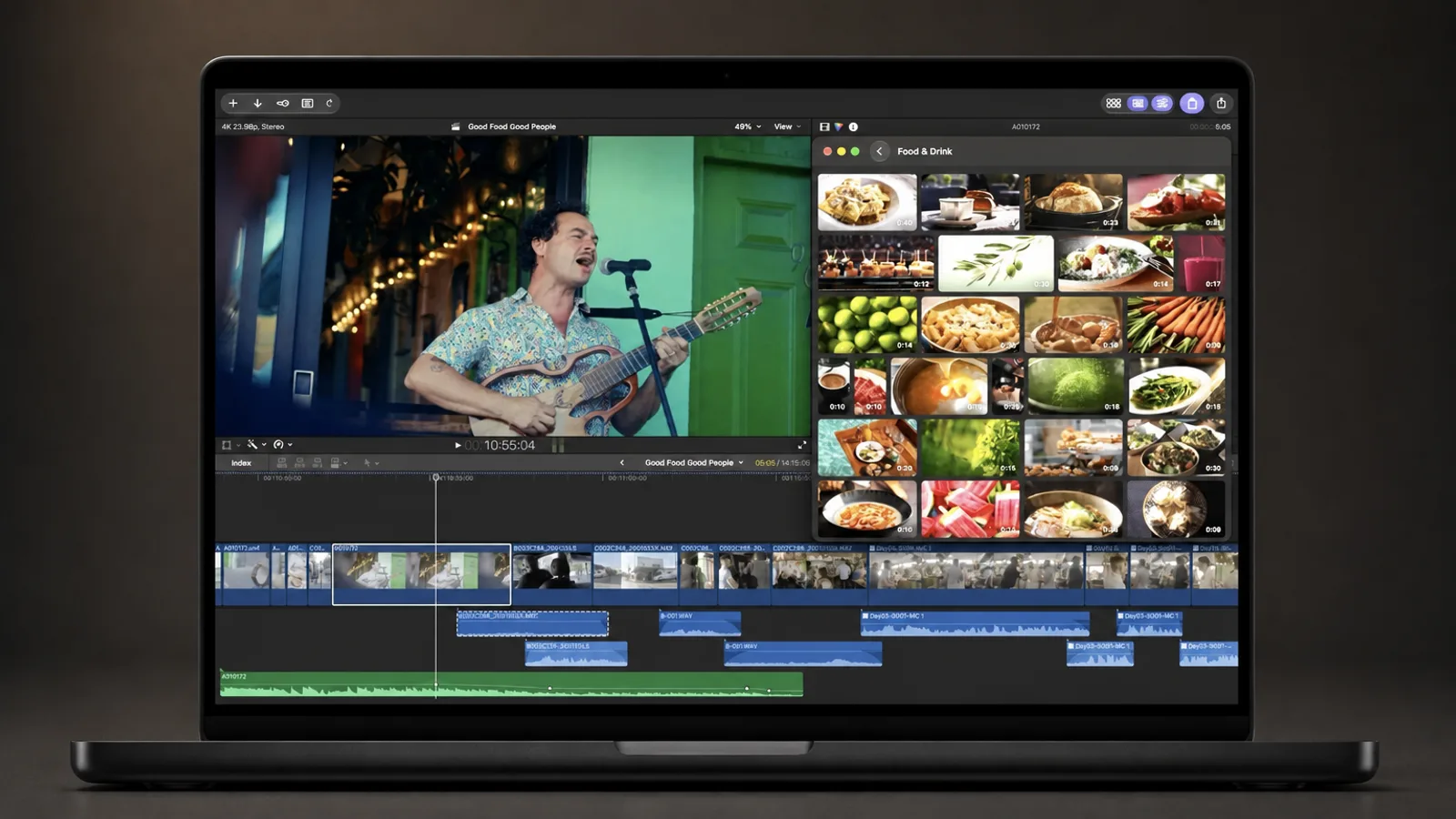
Apple is also launching a Content Hub inside Final Cut Pro that supplies stock footage, stills and backgrounds directly from the app. That hub is intended to shorten the time it takes to pull in reference imagery or fill plates during an edit, giving editors ready access to licensed media without bouncing back and forth to external libraries.
Image work has been a particular focus. The update creates a much tighter bridge between Final Cut Pro and Pixelmator Pro: images can be opened from within the timeline, edited in Pixelmator Pro and returned automatically to the project. Apple is pairing that link with new AI image generation features so users can create visuals from text prompts and use Pixelmator Pro’s new Generate Fill tools to alter portions of an image by describing the desired change in natural language.
Apple did not add a conversational AI editing assistant to Final Cut Pro in this release. Instead, the company appears to be concentrating on AI that enhances visual creation and speeds common image tasks rather than on a chat‑style assistant for editing decisions.
Outside Apple’s ecosystem, Blackmagic Design is pushing its own AI integration. DaVinci Resolve 21.1 gains Model Context Protocol (MCP) support so compatible external AI assistants — including models such as ChatGPT and Claude — can interact with supported editing operations. That approach opens the door to third‑party assistants that can be wired into specific Resolve tasks and workflows.
On pricing and distribution, Apple is positioning the new features inside a subscription called Apple Creator Studio as well as keeping the traditional purchase option. Creator Studio provides access to Final Cut Pro along with other creative apps and a MotionVFX content tier for subscribers. The subscription carries a cost of $12.99 per month or $129 annually; Final Cut Pro will remain available as a standalone purchase priced at $299.99.
DaVinci Resolve retains a strong position for editors who prefer non‑subscription options: a fully capable free edition continues to be offered, and DaVinci Resolve Studio is typically sold as a one‑time purchase for $295. Blackmagic is temporarily promoting Studio at $236 under a limited offer that runs through November 20, 2026.
Taken together, the changes make Final Cut Pro more of a platform than a single app: integrated asset stores, closer ties to a professional Pixelmator Pro image pipeline, MotionVFX content and AI‑assisted image creation all tilt the product toward editors who want fewer app switches and faster iteration. For editors who favour single‑purchase software or who need specific AI assistant integrations, rival approaches from Blackmagic — notably MCP support in DaVinci Resolve 21.1 — present alternative routes.
Functionally, editors should see faster image edits and fewer import/export steps when working with stills and generated imagery. Timeline tweaks such as improved easing and looser clip placement will be useful for motion designers and complex multicam or compound edits. The Content Hub is likely to be convenient for small productions that need quick access to stock elements inside the same interface where they cut.
Apple’s update is both technical and strategic: it brings more creative building blocks into Final Cut Pro itself and packages some of that expanded capability into a subscription bundle. Whether the market shifts toward this kind of integrated, subscription‑backed creative ecosystem will depend on how often editors use the bundled content and how the cost compares with mixes of standalone apps and third‑party purchases.
For post houses and independent editors, the competing messages are familiar. Apple is betting convenience and tighter app integration will attract users; Blackmagic is emphasising interoperability with external AI assistants and keeping strong free and perpetual‑license options. Both approaches reflect ongoing changes in how editors work with machine learning tools, templates and cloud or subscription content.
Apple’s announcement lays out the features and pricing but does not replace established licensing choices: Final Cut Pro can still be bought outright, while the subscription offers another path for frequent users. Blackmagic’s recent version work and promotional pricing for Studio provide direct price comparisons for shops weighing subscription versus one‑time payment options.
Readers should expect the new Final Cut Pro features to arrive in November 2026 as part of Apple’s Creator Studio roll‑out, and to see Blackmagic’s MCP support surface in DaVinci Resolve 21.1 for editors who want to connect third‑party AI agents to their grading and editing workflows.
If you rely on Final Cut Pro, the update is worth testing as soon as it ships: the MotionVFX access, Pixelmator Pro bridge and AI image tools will change how photos and generated visuals enter and evolve inside projects, and the timeline refinements will be immediately relevant to many editors’ daily work.
Specs
| Release | November 2026 |
|---|---|
| Additional transcription languages | 23 |
| Apple Creator Studio (monthly) | $12.99 |
| Apple Creator Studio (annual) | $129 |
| Final Cut Pro (one‑time) | $299.99 |
| DaVinci Resolve Studio (one‑time) | $295 |
| Blackmagic Studio promotional price | $236 |
| Blackmagic promo end date | November 20, 2026 |
| DaVinci Resolve version with MCP support | 21.1 |
FAQ
- When will the Final Cut Pro update arrive?
- Apple has scheduled the update for November 2026.
- What new integrations does the update add?
- Final Cut Pro gains integrated MotionVFX content, closer Pixelmator Pro image workflows and AI image‑generation features.
- How much does Apple Creator Studio cost, and is Final Cut Pro still sold separately?
- Apple Creator Studio is $12.99 per month or $129 annually, and Final Cut Pro remains available as a $299.99 standalone purchase.
Using or buying gear in the GCC? Read our GCC guide