
Links to B&H and other dealers in a story may earn T-Stop a commission at no cost to the reader. As an Amazon Associate, T-Stop earns from qualifying purchases.
Tamron 16-50mm f/2.8 A (Model B091) arrives as a pocketable APS‑C constant f/2.8 zoom
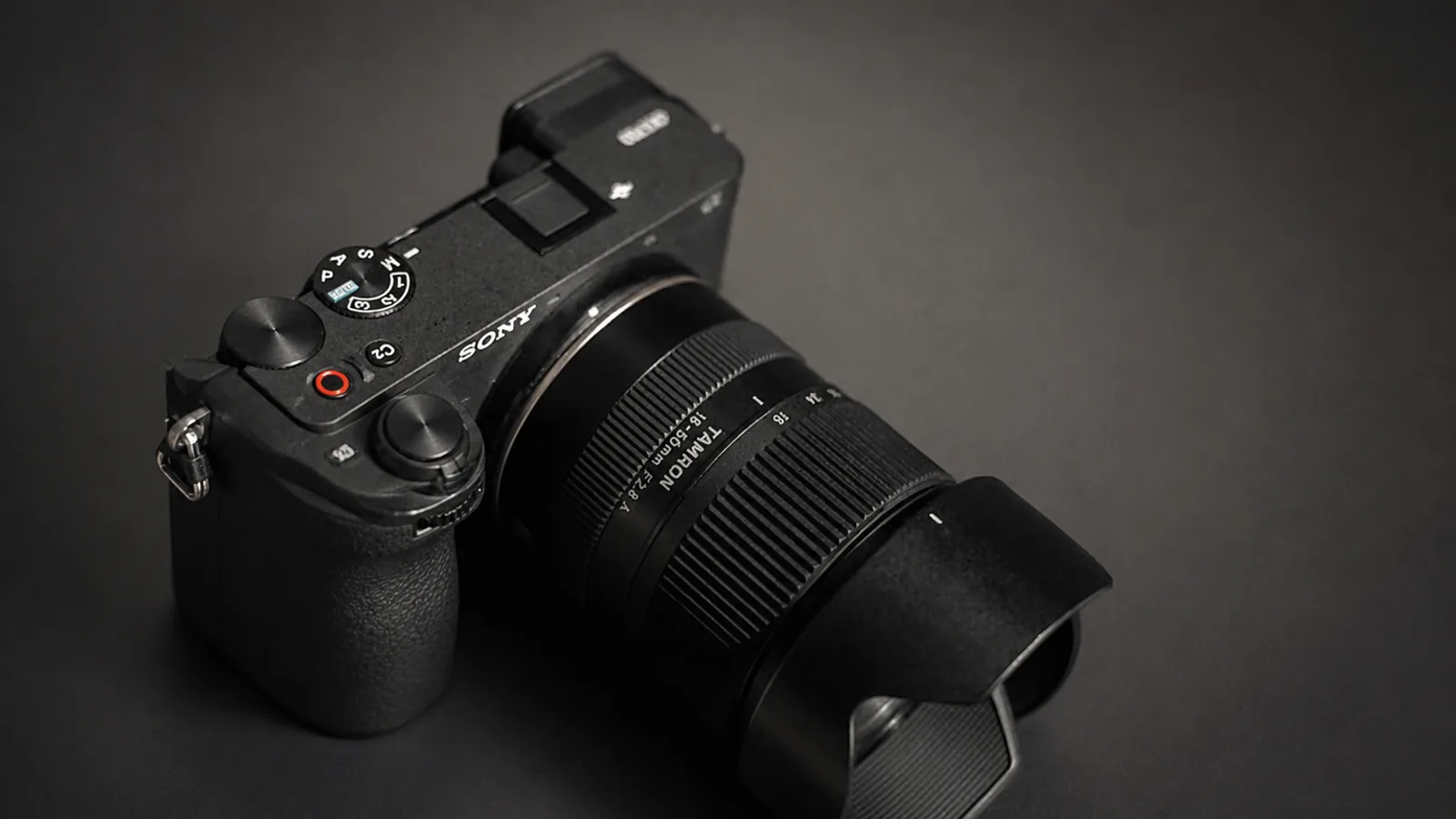
Tamron’s new 16-50mm f/2.8 A is a compact constant‑aperture APS‑C zoom available for Sony E, Canon RF, Nikon Z and FUJIFILM X mounts.
Key points
- TAMRON unveiled the 16-50mm f/2.8 A (Model B091), a compact constant f/2.8 zoom for APS‑C mirrorless systems.
- It weighs 305g / 10.8oz (315g / 11.2oz for Nikon Z), covers a 24-75mm equivalent range and takes 55mm filters.
- Sony E and FUJIFILM X versions are $529 / €469.99 / £399.99; Canon RF and Nikon Z versions are $549 / €499.99 / £419.99, with staged shipping dates.
Tamron has added a compact constant‑aperture standard zoom to its APS‑C range: the 16-50mm f/2.8 A (Model B091). The design targets photographers and hybrid shooters who prioritise a small, light system while keeping an f/2.8 maximum aperture across the zoom range.
On mirrorless APS‑C bodies the lens delivers a full‑frame equivalent field of view of 24-75mm on Sony E, Nikon Z and FUJIFILM X mounts; Canon RF bodies see a 25.6-80mm equivalent because of Canon’s 1.6x crop factor. Tamron offers the new lens for Sony E, Canon RF, Nikon Z and FUJIFILM X, so shooters across the main APS‑C systems can use the same optical concept.
The optical formula is 14 elements in 10 groups and incorporates specialised glass to control aberrations: one LD (Low Dispersion) element, two GM (Glass Molded Aspherical) elements and two hybrid aspherical elements. Tamron has kept the front filter thread to 55mm, which helps compatibility with compact filters and accessories.
Autofocus is handled by Tamron’s VXD linear motor, and the company calls out a number of measures aimed at run‑and‑gun and travel use. The barrel features moisture‑resistant construction with seals, and a fluorine coating on the front element repels water and oil. Minimum focusing distance is close for a standard zoom: 0.15m / 6in at 16mm and 0.29m / 11.5in at 50mm, with maximum magnifications of 1:4.5 at the wide end and 1:4.8 at the long end.
Tamron’s UK and Benelux distributor describes the 16-50mm as compact within the company’s f/2.8 zoom family, and the manufacturer positions it as an option for photographers who want smaller, lighter gear rather than optical stabilisation. The new lens sits alongside Tamron’s 17-70mm f/2.8 Di III‑A VC RXD, the latter being the heavier option that includes VC (Vibration Compensation) for optical image stabilisation.
The new zoom covers a fairly broad diagonal angle of view: 84°04′ to 32°11′ on the versions that give a 24-75mm equivalent, and 80°24′ to 30°16′ on Canon RF. The aperture range runs from f/2.8 to f/16, and Tamron says the diaphragm remains almost perfectly circular up to two stops down from maximum aperture; the physical iris is a seven‑blade design — described in the technical notes as a "seven-blade circular diaphragm." That construction aims to give more pleasing out‑of‑focus highlights when shooting at wider apertures.
The lens is especially tailored to compact travel and vlogging setups. Tamron highlights the 16mm wide end for self‑recording, the quiet VXD motor and a balance it says "suits handheld and gimbal work." Those traits make the lens useful for run‑and‑gun video as well as stills where portability matters.
Mount‑specific dimensions are compact: the Sony E version is 79.6mm / 3.2in long with a maximum diameter of 64.4mm / 2.5in; the FUJIFILM X version is 79.9mm / 3.2in long; the Canon RF version is 77.6mm / 3.1in; and the Nikon Z version is 81.6mm / 3.3in. Weight is uniformly light at 305g / 10.8oz for all versions except the Nikon Z mount, which weighs 315g / 11.2oz.
For users who like to customise behaviour and keep firmware current, Tamron says the Sony E and Nikon Z variants support the TAMRON Lens Utility software; the company summarises that software capability by noting it "lets users assign functions to the lens and update its firmware." That provides a route to tweak features or benefit from later optimisations without replacing hardware.
Tamron has added a few pragmatic design touches: a flower‑shaped hood is supplied in the box alongside front and rear caps, and the barrel carries seals for better resistance to moisture. The overall package is clearly aimed at photographers who want a versatile walk‑around lens that won’t add much bulk to a kit.
Physically and optically the 16-50mm positions itself as an alternative to longer reach, heavier APS‑C f/2.8 zooms. Tamron points out the trade‑off explicitly: choose the new lens for smaller size and mobility rather than built‑in optical stabilisation. That argument mirrors a broader market split where some users prefer mechanical or in‑body stabilisation approaches and others trade that away in favour of lower weight.
On the business side Tamron published prices by mount. The Sony E and FUJIFILM X versions are listed at $529 / €469.99 / £399.99, while Canon RF and Nikon Z mount examples carry a slightly higher price of $549 / €499.99 / £419.99 (EUR and GBP prices are recommended retail prices). Ship dates are staggered: Sony E and Canon RF versions ship on October 29, 2026; the Nikon Z mount follows on November 19, 2026; and the FUJIFILM X mount ships on December 17, 2026.
The launch comes as Tamron’s business situation draws attention: it follows Sony’s proposal to make TAMRON a wholly owned subsidiary. Whether that broader corporate news affects product plans remains to be seen, but the 16-50mm f/2.8 A is a practical statement about where Tamron sees demand in APS‑C systems — compact, fast, and portable optics for everyday use.
Optically the lens blends specialised elements and aspherics to keep aberrations in check across the zoom range. The set of one LD, two GM and two hybrid aspherical elements is a compact way of controlling colour fringing and field curvature without adding too much bulk. That helps Tamron hit the light weight targets while still offering a usable image circle for APS‑C sensors.
For shooters weighing kit choices, the 16-50mm’s focal range and constant f/2.8 will cover many common needs from wide environmental portraits and street to short telephoto work. The close focusing performance at 16mm and the relatively strong maximum magnification figures give a bit of macro‑like capability for close subject work, though it is not a dedicated macro optic.
In practical terms the combination of small diameter, short length and light weight means the 16-50mm can be a strong match for small mirrorless bodies and stabilised camera systems. Tamron’s messaging makes clear the lens is an option for photographers who prefer smaller luggage and easier handling over built‑in optical stabilisation in the lens itself.
A supplied hood, caps and the choice of four mounts round out the package. For users on Sony E and Nikon Z platforms the Lens Utility support is a useful extra for customisation and updates. Tamron’s new 16-50mm f/2.8 A (Model B091) is therefore a compact, fast, and versatile standard zoom aimed at everyday portability and video‑friendly handling.
Specs
| Focal length | 16-50mm (24-75mm equivalent on Sony E, Nikon Z and FUJIFILM X; 25.6-80mm on Canon RF) |
|---|---|
| Minimum aperture | f/16 |
| Optical construction | 14 elements in 10 groups |
| Minimum object distance | 0.15m / 6in (16mm); 0.29m / 11.5in (50mm) |
| Maximum magnification | 1:4.5 (wide); 1:4.8 (tele) |
| Filter thread | 55mm |
| Length (Sony E) | 79.6mm / 3.2in |
| Maximum diameter (Sony E) | 64.4mm / 2.5in |
| Length (FUJIFILM X) | 79.9mm / 3.2in |
| Length (Canon RF) | 77.6mm / 3.1in |
| Length (Nikon Z) | 81.6mm / 3.3in |
| Weight | 305g / 10.8oz (315g / 11.2oz for Nikon Z) |
Where to buy
TAMRON 16-50mm f/2.8 A (Model B091)FAQ
- Which mounts will the Tamron 16-50mm f/2.8 A be available for?
- Tamron offers the 16-50mm f/2.8 A for Sony E, Canon RF, Nikon Z and FUJIFILM X mounts.
- Does the lens include optical stabilisation?
- No — Tamron positions the 16-50mm for shooters who prefer size and mobility over VC; the 17-70mm f/2.8 Di III‑A VC RXD is the stabilised, heavier option.
- Can I update firmware or assign functions to the lens?
- The Sony E and Nikon Z versions support the TAMRON Lens Utility that "lets users assign functions to the lens and update its firmware."
Using or buying gear in the GCC? Read our GCC guide